We all already know that AI is transforming the way in which organisations work. This could be as simple as an AI assistant or a chatbot, or it could be that the entire company changes to revolve around an AI functionality. Nonetheless, most companies are heavily investing in AI capabilities.
However, most companies only want to include an AI functionality based on the hype, not because it delivers any value. What they neglect is the quality of the data, while the AI model is only as reliable as the data it is built upon. That’s where data quality testing comes in.
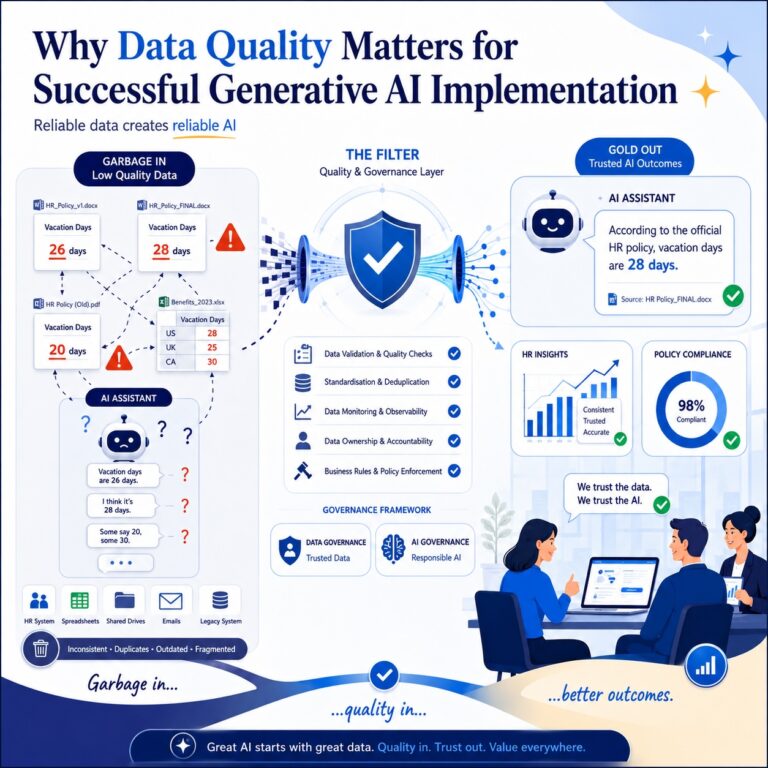
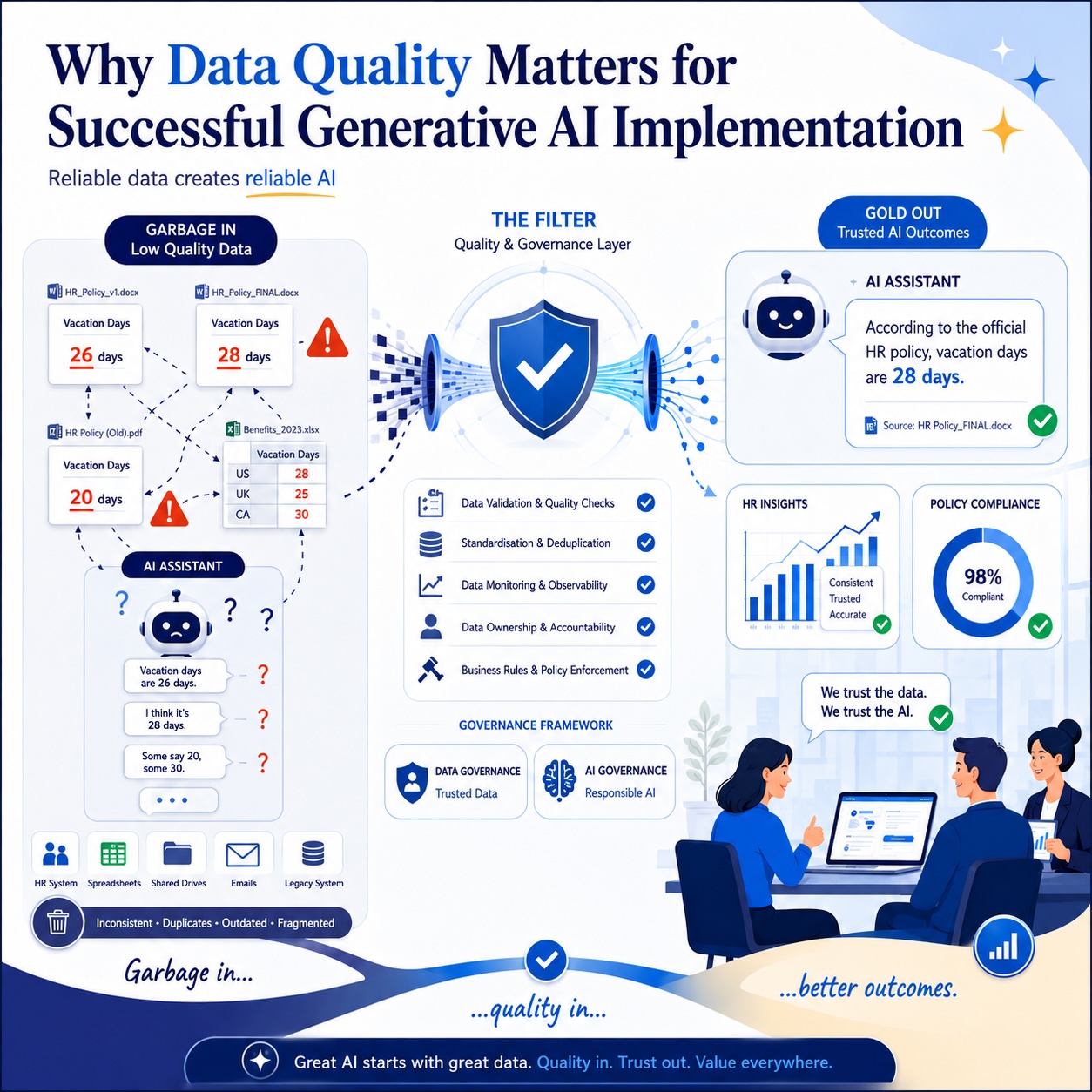
Many AI projects don’t reach their full potential because the underlying data is not of sufficient quality. This is often described by the principle of ‘garbage in, garbage out’, indicating that outcomes are poor if the input information is poor.
A good example of this is an AI powered customer support chatbot. Let’s say the company is implementing a chatbot to help employees with questions about HR policies. The AI model itself might work well, but the underlying policies that get fed into the model might contain outdated or incomplete policies, or conflicting information in different systems. This will result in the chatbot providing inconsistent or just flat–out incorrect answers.
So, if two documents exist with a different number of vacation days, a different number will be provided to the employee based on what document the chatbot uses as its source. Let’s say your company offers 28 vacation days this year, but it was 26 last year and that document still exists. The bot could provide you the wrong number, giving you the impression that you have less vacation days this year. The AI model probably functions properly here, but the lack of data quality creates issues.
This is an important intermediary step that most organisations overlook. They immediately go from the collecting data process to deploying an AI model. They miss the step where they make sure that the data is trustworthy and properly managed. Before scaling AI, organisations should make sure that their AI is ready by implementing validation, monitoring and governance.
Strong Data Quality practices make sure that the data that gets used in the AI model is accurate, complete, consistent and up-to-date. Use this in combination with Data Governance and AI Governance, and you create visibility in where the data comes from, who owns the data and whether you can trust the data. Here it becomes visible that Data Quality and AI Governance co-exist and are mutually beneficial. The better the Data Quality, the better the output of the AI model.

Poor Data Quality in AI models also creates business risks. This has everything to do with trust. Employees or customers might lose trust in the AI model if it does not consistently provide accurate information. This could lower adoption rates, reduce operational efficiency or might even create compliance risks in certain industries.
So how to implement Data Quality to improve your AI models?
The first step is understanding what data is actually being used by the AI model. Many organisations have data spread across multiple systems, departments and applications, most probably with inconsistent definitions or duplicate records. Before deploying AI company-wide, organisation should identify critical datasets and assess whether they are fit for purpose. This includes checking for missing values, outdated records, conflicting business definitions and incomplete metadata.
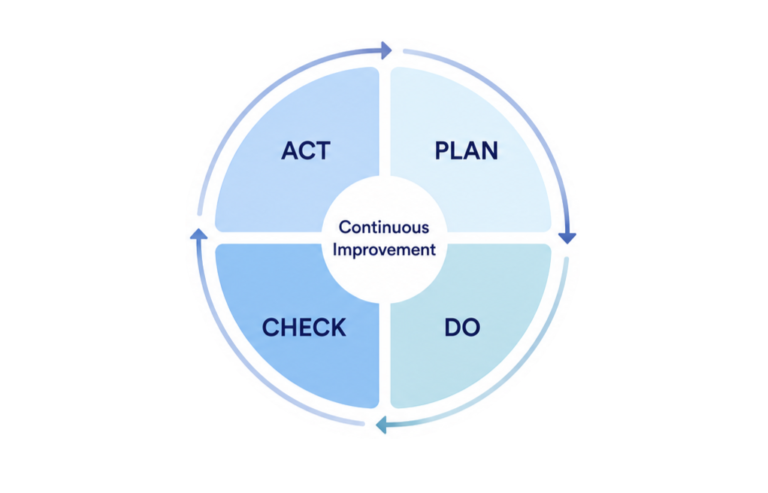
The second step is implementing continuous Data Quality monitoring. Data Quality is not a one-time thing. All data within in the company constantly changes, which means that new quality issues can arise every day. Monitoring allows organisations to identify issues early before they can negatively impact AI outputs. This should include validation rules, anomaly detection, duplication checks and alerts when certain thresholds are reached. Want to see what continuous monitoring looks like, read our blog about it here.
Another important factor is assigning ownership. Data Quality improves significantly when there are clear responsibilities for maintaining and validating data. This is where Data Governance and AI Governance become closely connected to AI success. By assigning data owners and stewards, organisations can create accountability and ensure that data remains trustworthy over longer periods of time.
Standardisation also play a big role. AI models perform better when data follows consistent formats, definitions and business rules across different systems. If one department defines a customer differently from another department, or if systems store data in different formats, the AI model may produce unreliable results. Standardising business definitions and creating a shared understanding of key data elements within the organisation helps to reduce these inconsistencies.
To successfully implement an AI model, you need all in place, Data Quality monitoring, a Data Governance implementation and AI Governance. Want to know more about how to implement these topics, feel free to reach out, we are always open for the conversation.