Many theories, books and step by step plans describe how to start with Data Quality using a Data Quality Framework. It rightly feels like a milestone when this framework is on paper and ready for implementation. However, this is often where the biggest challenge begins: how do you bring these well considered plans into practice?
A framework can be strong in terms of content, but at the same time it only creates value when employees understand what it means, which responsibilities they have and how they should use it in their daily work. This blog therefore focuses on three questions: what is a Data Quality Framework, which conditions are required for implementation and, most importantly, how do you ensure that the framework becomes embedded in the business?
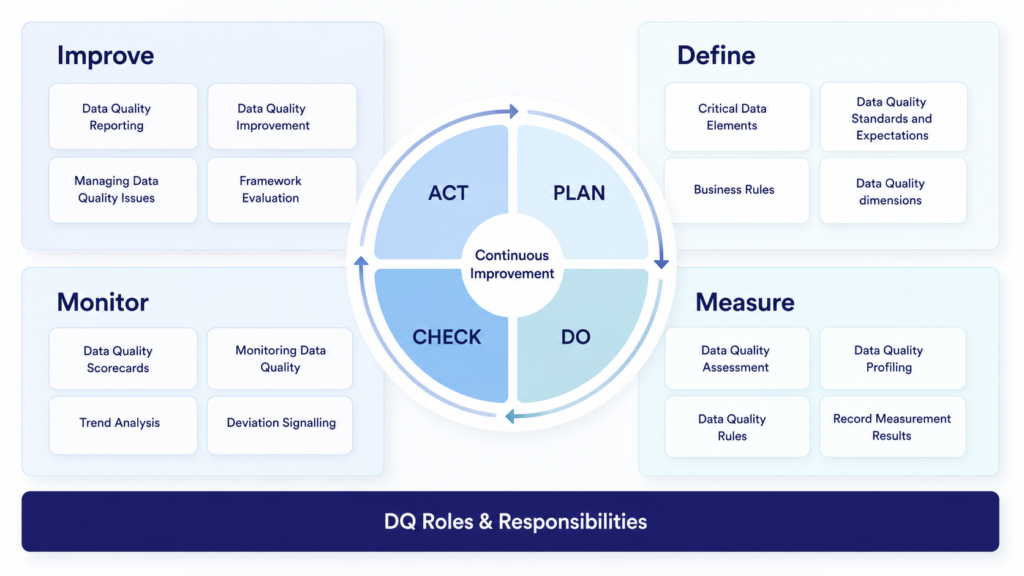
What is a Data Quality Framework?
A Data Quality Framework is the coherent way in which an organisation defines, governs, measures, monitors and continuously improves the desired quality of its data.
The framework provides direction for how an organisation manages Data Quality. It clarifies which data is important, what the organisation considers to be sufficient quality and what needs to happen when data does not meet the agreed expectations.
A Data Quality Framework should define at least the following topics.
1. Which data is important to the organisation?
Define which datasets and critical data elements are essential for business processes, decision making, reporting, Compliance and AI applications.
Not all data has the same value or risk profile. It is therefore important to determine which data requires additional attention. Adoption of the framework also becomes much more straightforward when employees genuinely recognise the critical data elements as being critical.
2. What does quality mean?
Define which Data Quality dimensions and Data Quality standards apply to the intended use of the data. Also define which Business Rules apply. For a deep dive into Data Quality dimensions read our blog “the six most used data quality dimensions”.
What counts as sufficient quality differs depending on the situation. Data may, for example, need to meet different requirements when it is used in an operational process than when the same data is used for reporting or an AI application.
For this reason, well defined Business Rules help clarify when data is correct, complete or usable. Employees should recognise these Business Rules from their daily work. This is why these Business Rules should be gathered from the operational teams.
3. How is quality measured?
Describe which controls and measurement methods are used, in which tools they are performed, how often measurements take place and how the results are recorded. Want to know more about sufficient tooling? Read our blog “data quality tools”.
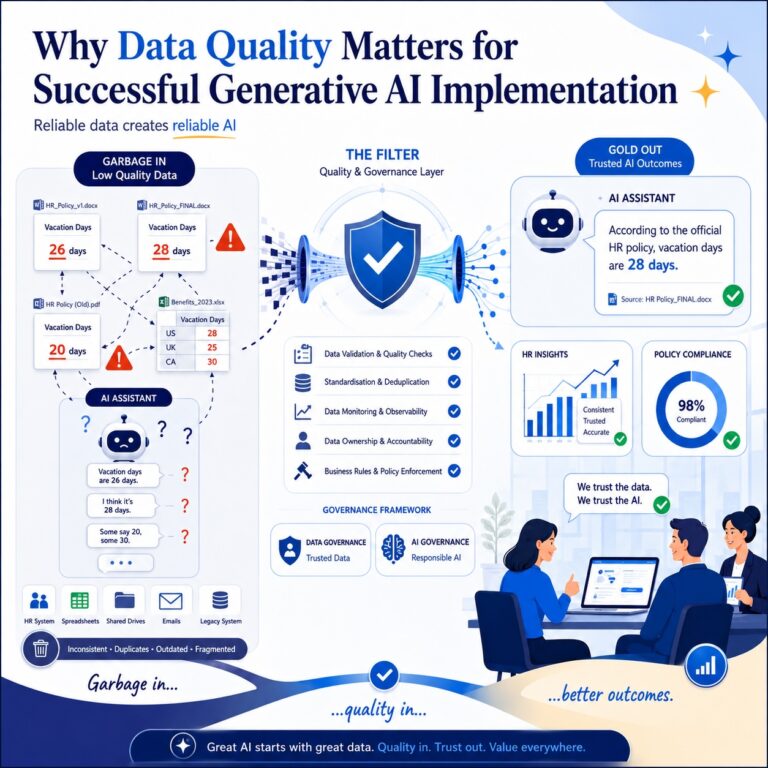
By making clear agreements in advance about how quality is measured, the organisation creates a consistent view of quality. This makes it possible to compare results, monitor developments and identify deviations in time.
4. How are Data Quality problems resolved?
Define how issues are registered, prioritised, assigned, investigated, corrected and formally closed.
Root cause analysis is an important part of this process. However, correcting inaccurate data alone is not enough. By also investigating and addressing the cause, the organisation can reduce the number of recurring issues. Make sure that this process supports the business and test it in practice.
5. How are recurring and new problems prevented?
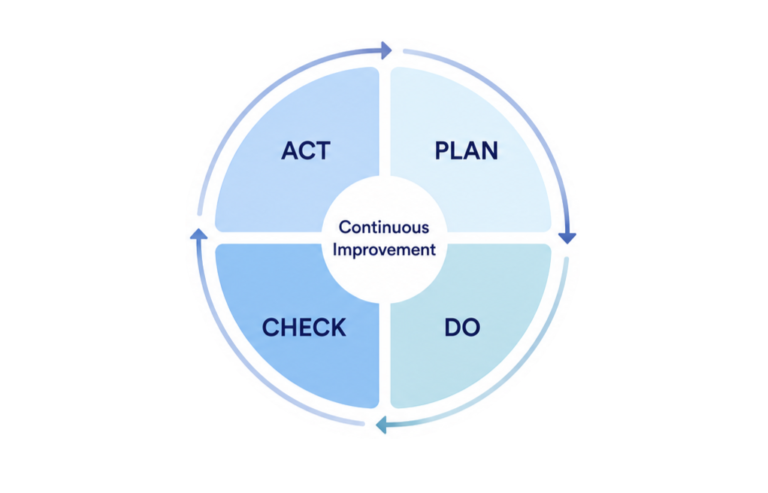
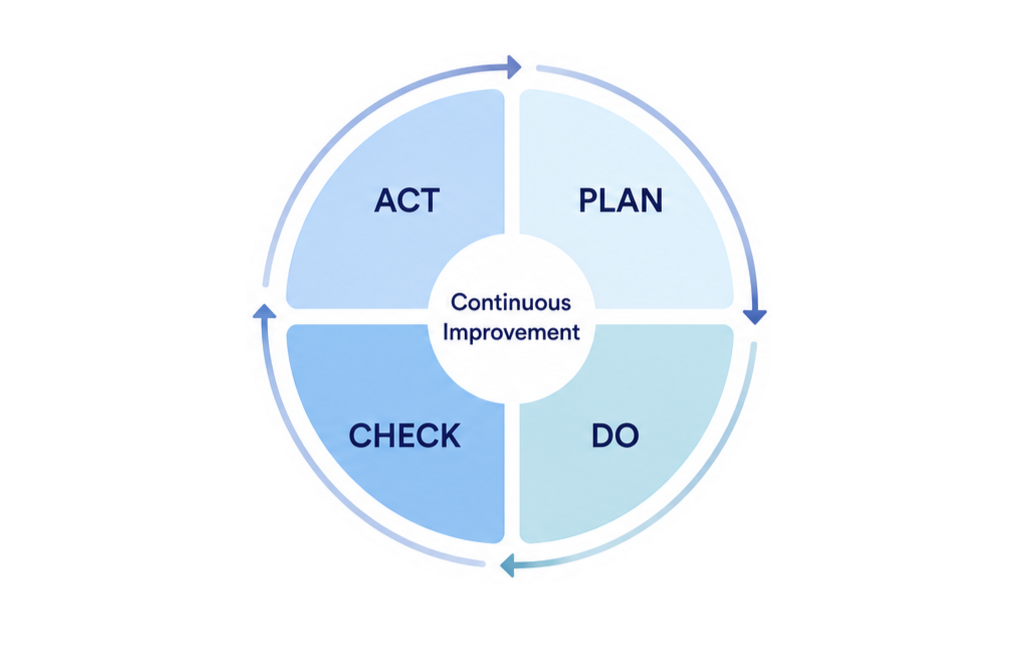
Describe the methodology for the controls and measures needed to prevent new errors. In addition, define how the organisation periodically evaluates the framework. This ensures that continuous improvement becomes a fixed part of the approach.
Conditions for successful implementation
To put these elements into practice, several conditions are needed for successful implementation. These include technical conditions, management mandate, a clear connection with business objectives and vision, and an established Data Governance organisation.
In our view, clear roles and responsibilities in the area of Data Quality are among the most important conditions. The organisation must clearly understand who is responsible for the data, who performs the daily management, who manages the framework and who provides support for content related or technical questions.
In practice, this includes the following roles:
Data Owner
Data Steward
Data Quality Manager
Subject Matter Expert
IT Specialist
Together, these roles create the foundation for clear ownership and effective collaboration. To make this practical, document the roles and responsibilities in a RACI and communicate them clearly to the business. As the Data Governance organisation matures and grows, expand the role allocation accordingly.
Pragmatic tips for implementation
Now that you know what a Data Quality Framework is and which minimum conditions are required, we share several best practices below to help bring the framework into practice.
Start small and work in phases
Implement the framework within one data domain, process or use case first. Preferably choose data with visible business impact. As a result, it becomes easier to demonstrate the value that the framework can deliver. Based on this experience, develop the approach further before rolling out the framework more widely.
By starting small, the implementation remains manageable and the organisation can learn what does and does not work in practice.
Make sure the conditions are in place
Define roles, responsibilities and decision making authority before the organisation starts measuring. At a minimum, clarify who acts as the Data Owner, Data Steward and Data Quality Manager. When these responsibilities are unclear, it is not possible to implement the framework described above properly.
In other words, a framework only works when it is clear who needs to act when data does not meet the agreed quality standards, and when colleagues feel both the urgency and responsibility to take action.
Test the framework in practice
Work with enthusiastic and experienced Data Stewards to assess whether the framework is understandable, workable and useful. Data Stewards can quickly identify where procedures are too theoretical, unclear or administratively burdensome. They are close to the daily use of data and can therefore properly assess whether the agreements align with practice.
For this reason, do not develop the framework solely from the perspective of Data Governance or IT. Use feedback from Data Stewards to make the framework more workable.
Make well defined Business Rules a central component
Moreover, Business Rules form the basis for Data Quality Rules. As described earlier, employees recognise Business Rules from their daily work. To make the story around the framework clear, it is therefore important to start by implementing Business Rules and explaining the framework using these known rules.
Visualise the framework on one page
Develop a clear visualisation that shows the main components and how they relate to each other.
A one page visualisation makes the framework more accessible to the business. At the same time, it prevents employees from first having to read an extensive policy document before they understand the main points.
Use the visualisation actively in communication, workshops and conversations with Data Owners and Data Stewards.
Plan interim evaluations
Evaluate the framework regularly. Gather feedback from Data Stewards, Data Owners, data consumers and technical teams. Look not only at the content of the framework, but also at how practical it is to use.
However, a framework can be complete on paper and still fail to align sufficiently with practice. Therefore, interim evaluations help identify bottlenecks early and make it possible to adjust the approach in a focused way.
Carry out periodic assessments
When a framework is already in place, it is important to periodically assess how far it is from daily practice.
For example, assess whether roles are actually being performed, whether Business Rules are understandable and considered valuable, whether Data Quality issues are followed up and whether monitoring leads to concrete improvements.
An assessment shows where differences exist between the designed framework and its application in the business. As a result, the organisation can work specifically on reducing these differences.
From framework to practice
Ultimately, a Data Quality Framework is an important starting point, but its value only emerges through application. At the same time, success does not depend solely on the content of the framework. Clear responsibilities, engaged employees, understandable Business Rules and an approach that aligns with existing business processes are just as important.
Therefore, start small, test regularly and continue developing the framework together with the business. A framework does not need to be perfect immediately. Above all, it must be clear, workable and useful.
Do you need support assessing the gaps between your framework and the business, or are you curious about how our Data Quality experience and knowledge can be applied within your organisation? Are you finding it difficult to achieve Data Quality adoption? Feel free to contact us.